




You should wait at least 24 hours after taking Dramamine before you drink alcohol. Dimenhydrinate, Dramamine’s active ingredient, has a half-life of 5, 10 hours, so its sedating effects can linger well beyond your last dose. Since both substances depress your central nervous system, combining them too soon can cause extreme drowsiness, impaired coordination, and even respiratory depression. Factors like your age, liver function, and dosage can also influence how quickly your body clears the drug.
Wait at Least 24 Hours After Dramamine to Drink
If you’ve taken Dramamine and are wondering when it’s safe to have a drink, the general recommendation is to wait at least 24 hours. Dimenhydrinate has a half-life of approximately 5, 10 hours, meaning residual effects can linger well beyond your last dose. During this window, your central nervous system remains suppressed, and adding alcohol intensifies drowsiness, dizziness, and coordination impairment. Because both substances depress the central nervous system, even small amounts of alcohol can significantly worsen side effects before Dramamine has fully cleared your body. Signs of a dangerous interaction or overdose include slurred speech, extreme fatigue, confusion, flushed skin, and dilated pupils, all of which require immediate medical attention.
Why Dramamine Amplifies Alcohol’s Effects
Because both Dramamine and alcohol depress the central nervous system, combining them doesn’t just double the sedation, it amplifies their effects in ways that are difficult to predict. Understanding why matters when you’re asking how long after taking Dramamine can I drink alcohol.
When both substances are active, you may experience:
- Extreme drowsiness beyond what either substance causes alone
- Impaired coordination, including slurred speech and loss of balance
- Mental fog and confusion that affects judgment and reaction time
- Increased overdose risk, including respiratory depression
This is why you can’t safely drink after taking Dramamine until the drug has fully cleared your system. Similarly, knowing how long after drinking can I take Dramamine helps you avoid compounding these dangerous depressant effects.
What Happens if You Drink Too Soon After Dramamine?
If you drink alcohol before Dramamine has fully cleared your system, you’re likely to experience amplified central nervous system depression, which can cause extreme drowsiness, impaired coordination, and dangerously slowed reflexes. This compounded sedation also raises your risk of overdose, as both substances suppress essential functions like breathing and heart rate simultaneously. Recognizing these risks can help you make safer decisions about timing alcohol consumption around your medication use. If you’re wondering does dramamine help with drinking, it’s important to understand that combining the two can lead to unpredictable effects. Many people might find that while Dramamine alleviates motion sickness, it can also enhance the sedative effects of alcohol, making it difficult to gauge how much you’ve consumed. Therefore, it’s advisable to consult with a healthcare professional before mixing these substances to ensure your safety.
Amplified CNS Depression Effects
When Dramamine hasn’t fully cleared your system, drinking alcohol can amplify its depressant effects on the central nervous system well beyond what either substance produces alone. Both substances slow neural activity independently, and their combined impact creates additive sedation that considerably impairs your mental and physical functioning.
Key amplified CNS depression effects include:
- Excessive drowsiness even one drink can trigger severe sedation in sensitive individuals
- Pronounced dizziness slowed reflexes and balance disruption increase your fall risk
- Mental fog impaired short-term memory, confusion, and poor judgment compromise decision-making
- Respiratory depression slowed or shallow breathing poses serious health risks in severe cases
These compounded effects are unpredictable and vary based on your metabolism, dosage, and individual sensitivity to both substances.
Increased Overdose Risk
Drinking alcohol before Dramamine has fully cleared your system doesn’t just amplify sedation, it can push your body toward a genuine overdose. Early signs include dilated pupils, flushing, severe drowsiness, and loss of coordination. As toxicity escalates, you may experience confusion, slurred speech, difficulty swallowing, and hallucinations. In advanced cases, seizures, coma, and respiratory depression become life-threatening possibilities.
Alcohol sharply intensifies Dramamine’s toxicity, especially at doses exceeding 100 mg. If you have a history of substance misuse or you’re an older adult, your risk climbs further. Repeated mixing of these substances can lead to dangerous toxic accumulation in your body. Any combination that depresses your central nervous system this aggressively warrants serious caution, hospitalization or death remain real outcomes when overdose thresholds are crossed. should you mix dramamine and alcohol, even at lower doses, you may still face adverse effects such as increased drowsiness, impaired motor skills, and difficulty concentrating. It is crucial to seek medical advice before combining these substances, as the interactions can vary significantly based on individual health conditions and medications. Ultimately, prioritizing your safety and well-being should always take precedence over any potential short-term relief.
Symptoms That Signal a Dangerous Interaction
If you notice severe drowsiness paired with confusion or disorientation after combining Dramamine and alcohol, your central nervous system may be under dangerous levels of depression. You should also watch for breathing irregularities, such as shallow or slowed respiration, and heart rhythm changes like a rapid or irregular heartbeat. Overdose warning signs including hallucinations, seizures, dilated pupils, or loss of consciousness, require immediate emergency medical attention.
Severe Drowsiness And Confusion
Because both Dramamine and alcohol act as central nervous system depressants, combining them can trigger severe drowsiness that goes well beyond ordinary tiredness. You may experience heavy sedation, mental fog, and disorientation that impair your ability to function safely. Even one drink can produce significant sedation in sensitive individuals.
Key warning signs you shouldn’t ignore:
- Extreme sleepiness that makes staying awake nearly impossible
- Mental confusion with difficulty speaking clearly or thinking logically
- Impaired judgment leading to poor decision-making and reduced awareness
- Disorientation that mimics unpredictable intoxication
These symptoms indicate amplified CNS depression and can escalate toward overdose. If you notice confusion paired with flushing or dilated pupils, seek immediate medical attention. Don’t dismiss these signs as normal drowsiness.
Breathing And Heart Irregularities
When both Dramamine and alcohol suppress your central nervous system simultaneously, the effects can extend beyond drowsiness to disrupt essential functions like breathing and heart rhythm. You may experience shallow or labored breathing as both substances amplify respiratory depression. Even small amounts of alcohol can worsen breathing difficulties if Dramamine is still active in your system.
The combination can also trigger irregular or pounding heartbeats. Alcohol intensifies Dramamine’s cardiovascular impact, increasing your risk of arrhythmias and fainting. These symptoms signal a potentially dangerous interaction that demands immediate medical attention.
If you notice difficulty breathing, a racing or irregular heartbeat, or sudden fainting, stop use and seek emergency help. Sensitive individuals may face these risks even with minimal alcohol consumption.
Overdose Warning Signs
Recognizing overdose warning signs early can mean the difference between a close call and a life-threatening emergency. When you combine Dramamine with alcohol, toxic symptoms can appear rapidly and escalate quickly. Dilated pupils and skin flushing are early indicators that your body’s experiencing dangerous CNS depression.
Watch for these critical warning signs:
- Severe drowsiness progressing to heavy sedation, fainting, or blackouts
- Slurred speech and difficulty swallowing, signaling overdose progression
- Hallucinations, paranoia, or seizures, indicating toxic dimenhydrinate levels amplified by alcohol
- Paradoxical hyperactivity with confusion, impairing judgment and decision-making
If you notice any combination of these symptoms, don’t wait for them to worsen. Untreated hallucinations or seizures can lead to coma. Seek immediate medical attention to prevent a potentially fatal outcome.
Can Mixing Dramamine and Alcohol Cause an Overdose?
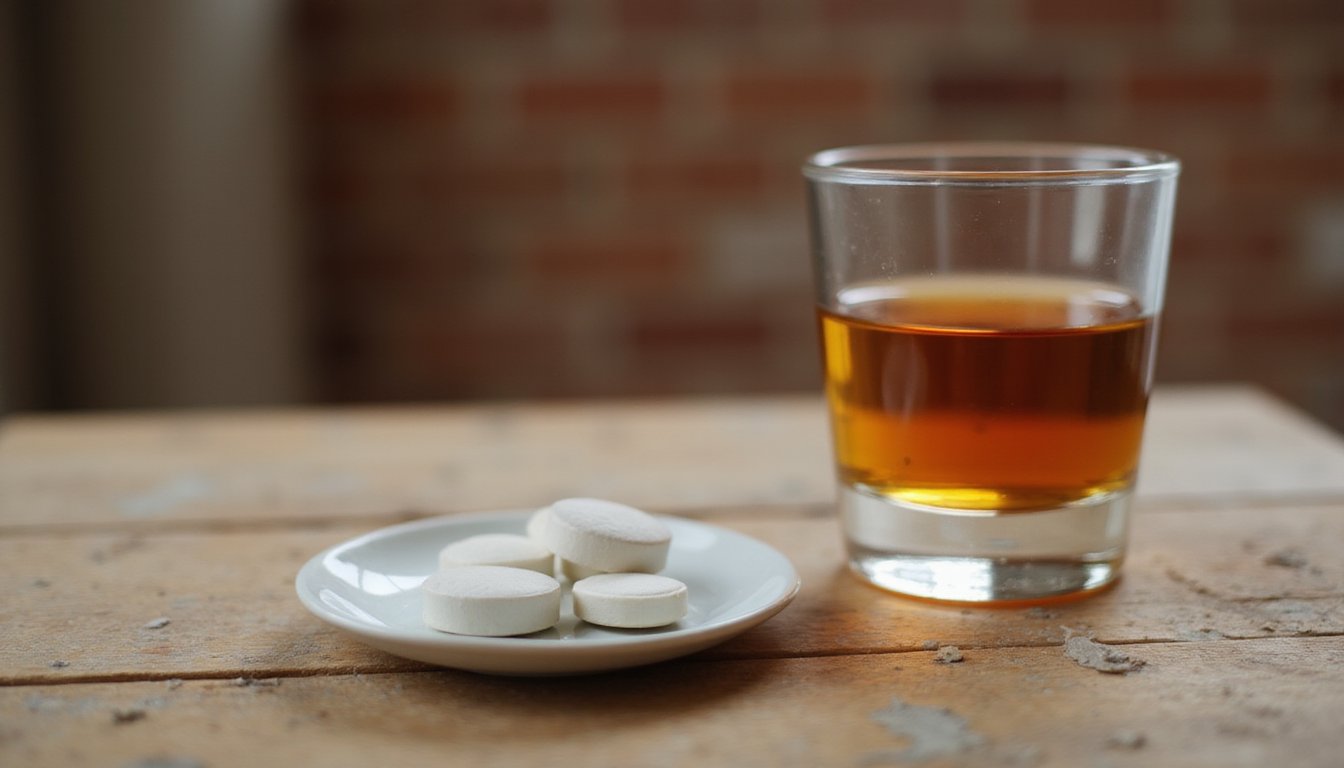
Mixing Dramamine and alcohol can greatly raise your overdose risk, even if you haven’t taken unusually high amounts of either substance. Both depress your central nervous system, and their combined effects amplify each other beyond what either would produce alone. This means dangerous levels of sedation can occur at doses that might otherwise seem manageable. can you drink alcohol dramamine can also lead to impaired judgment and slower reaction times, increasing the likelihood of accidents. It is crucial to consider the potential interactions, especially when engaging in activities that require full alertness. Always consult with a healthcare professional before mixing any medications with alcohol to ensure your safety.
Overdose signs to watch for include dilated pupils, facial flushing, severe drowsiness, and loss of coordination. As symptoms progress, you may experience trouble speaking, hallucinations, seizures, or even coma. Respiratory depression is particularly dangerous, as slowed breathing can become life-threatening.
You don’t need to take both substances simultaneously for this risk to apply. If Dramamine is still active in your system when you drink, the interaction can still trigger overdose symptoms.
What to Do if You Accidentally Mix Both
If you’ve accidentally combined Dramamine and alcohol, your first priority is evaluating how you feel and taking steps to stay safe. Monitor yourself for severe drowsiness, difficulty breathing, rapid heartbeat, or loss of coordination. If symptoms escalate, call 911 immediately.
Take these steps right away:
- Move to a safe environment away from hazards, machinery, or vehicles
- Avoid consuming any additional alcohol or medications
- Contact poison control if you’re unsure whether your symptoms require emergency care
- Have someone stay with you to monitor your condition until effects subside
When speaking with medical professionals, provide the exact timing and amounts of both substances consumed. Don’t resume driving or demanding activities until you’ve received medical clearance. Discuss safer motion sickness alternatives with your healthcare provider going forward.
Factors That Affect How Fast Dramamine Leaves Your System
Several biological and lifestyle factors determine how quickly your body eliminates Dramamine, and understanding them can help you make safer decisions about when it’s appropriate to drink alcohol.
Age and liver function matter greatly. If you’re over 65, your body may retain dimenhydrinate up to 50% longer than younger adults. Impaired liver function extends the half-life beyond 9 hours, while healthy livers clear it in 4, 6 hours.
Dosage directly affects elimination. Standard 50mg doses clear faster than repeated doses exceeding 400mg, which saturate metabolic pathways.
Genetic variations in CYP2D6 enzymes cause some individuals to metabolize Dramamine 30, 50% slower. Additionally, concurrent substance use including alcohol itself, competes for the same liver enzymes, further prolonging clearance. Staying hydrated may modestly speed renal excretion of metabolites by 1, 2 hours.
Safer Alternatives to Dramamine When You Plan to Drink
Knowing how quickly your body clears Dramamine is only part of the equation, choosing a treatment that carries fewer risks alongside alcohol can be just as important. Non-pharmacological methods offer effective relief without drug-alcohol interactions:
- Ginger supplements reduce nausea by up to 40% in motion sickness studies
- Acupressure bands on the P6 wrist point provide approximately 60% symptom relief
- Controlled breathing techniques lower dizziness incidence by 25%
- Hydration with electrolyte drinks helps prevent dehydration-induced nausea
If you need medication, Bonine (meclizine) produces less intense drowsiness than Dramamine, though alcohol mixing still carries risks. Scopolamine patches bypass rapid CNS depression peaks but require a prescription. You should consult your healthcare provider before combining any motion sickness medication with alcohol, as all pharmacological options carry some interaction potential.
Get Help Today
Misusing over-the-counter medications like Dramamine is more common than most people realize, and what starts as casual use can quickly become a serious concern. At Fortify Wellness, we offer an Alcohol Detox program to provide the support and structure you need to take steps toward a healthier life. Call (818) 918-9564 today and start your journey to recovery.
Frequently Asked Questions
Can You Take Dramamine the Morning After a Night of Drinking Alcohol?
You can generally take Dramamine the morning after drinking, but you should make sure the alcohol has fully cleared your system first. If you’re still feeling the effects of alcohol like drowsiness, dizziness, or nausea, taking Dramamine may amplify those symptoms due to overlapping CNS depression. It’s best to wait until you feel fully sober and hydrated. If you’re unsure, consult your healthcare provider for personalized guidance.
Does Food Consumption Affect How Quickly Dramamine Leaves Your System?
Yes, food consumption can affect how quickly Dramamine leaves your system. When you take Dramamine with food, especially high-fat meals, your body absorbs it more slowly, which can extend how long it stays active. Food delays gastric emptying and may reduce peak levels while prolonging overall exposure. However, food doesn’t greatly change your liver’s metabolism rate. You should still wait at least 24 hours before drinking alcohol regardless of food intake.
Is Non-Drowsy Dramamine Safer to Combine With Alcohol Than Original Formula?
While non-drowsy Dramamine (meclizine) causes less baseline sedation than the original formula (dimenhydrinate), you shouldn’t consider it safer to combine with alcohol. Both formulas amplify central nervous system depression when mixed with alcohol, increasing your risk of dizziness, impaired coordination, and drowsiness. Product labels for both versions prohibit alcohol use. There’s no evidence supporting one as safer with alcohol, so you should avoid the combination entirely and consult your healthcare provider.
Can Dramamine and Alcohol Interaction Show up on a Drug Test?
Standard drug tests don’t detect Dramamine or its interaction with alcohol. These panels screen for substances like opioids, amphetamines, and marijuana, not antihistamines like dimenhydrinate. However, you should know that combining the two amplifies CNS depression, causing symptoms like slurred speech, impaired coordination, and confusion that mimic intoxication. This means you could fail a field sobriety test even if a breathalyzer only registers alcohol. You should prioritize your health over detectability concerns.
Does Dramamine Interact Differently With Beer, Wine, or Hard Liquor?
Dramamine doesn’t interact differently based on the type of alcohol you consume. Beer, wine, and hard liquor all depress your central nervous system, amplifying Dramamine’s sedating effects similarly. Even a single serving of any alcohol type can trigger extreme drowsiness, dizziness, and impaired coordination. Hard liquor may produce effects faster due to its higher concentration, but the underlying interaction remains the same. You should avoid all alcohol types while taking Dramamine.