





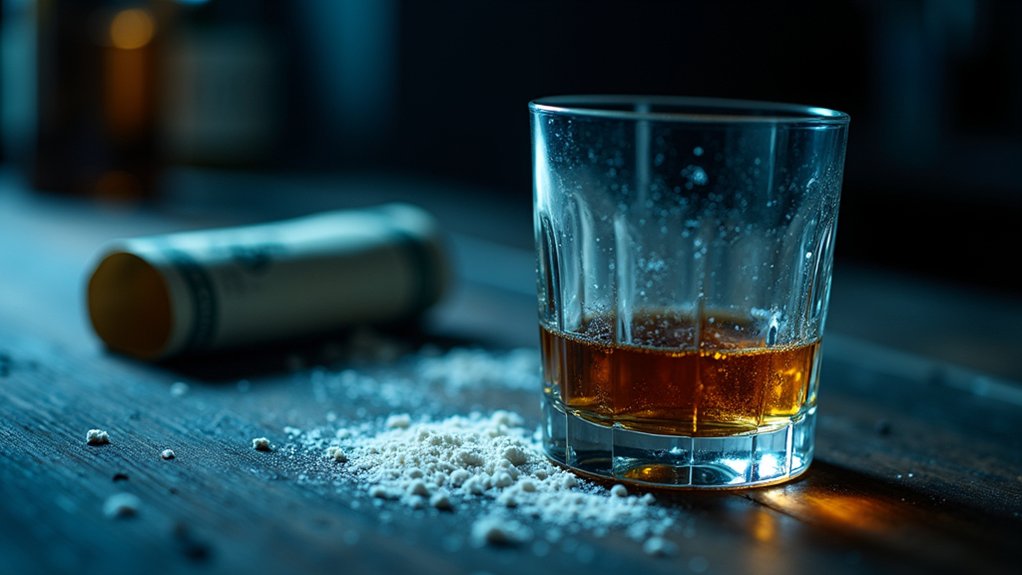

A speedball combines cocaine and heroin in a single dose, mixing a stimulant with a depressant. These drugs pull your body in opposite directions: cocaine raises your heart rate and blood pressure, while heroin slows your breathing. They don’t cancel out. Instead, cocaine masks heroin’s sedation, hiding early overdose signs until your breathing fails. That’s why speedballing more than doubles your fatal overdose risk. Below, you’ll learn exactly how this dangerous combination works.
Key Takeaways
- A speedball combines cocaine and heroin, delivering a stimulant and depressant simultaneously, creating one of the most dangerous forms of polydrug use.
- Cocaine raises heart rate and blood pressure while heroin slows breathing, straining the heart, lungs, and brain with contradictory stress.
- Cocaine masks heroin’s sedating effects, hiding early respiratory depression and delaying recognition of a life-threatening overdose.
- Cocaine wears off faster than heroin, leaving unopposed opioid effects that cause deeper respiratory depression and heightened overdose risk.
- Overdose signs include slow breathing, rapid heart rate, bluish lips, pinpoint pupils, seizures, confusion, or unresponsiveness, requiring immediate medical stabilization.
What is a speedball

A speedball is the deliberate combination of cocaine and heroin, typically injected or smoked at the same time. You’re mixing two drugs with opposing actions: cocaine works as a stimulant, while heroin acts as an opioid depressant. This combination doesn’t balance out safely. Instead, one drug can mask the other’s effects, making the outcome unpredictable and producing a stronger, riskier drug effect.
The practice has been documented since the 1970s, and clinicians consider it one of the most dangerous forms of polydrug use. When you take both together, you’re not reducing harm, you’re compounding it. The stimulant and depressant don’t cancel each other; they strain your heart, lungs, and brain simultaneously, creating a hazardous “push-pull” response your body struggles to manage.
What drugs a speedball combines (cocaine and heroin)
A speedball combines two drugs: cocaine and heroin. Cocaine acts as a stimulant, raising your heart rate and blood pressure while producing intense, short-lived euphoria. Heroin, an opioid depressant, slows your breathing and suppresses your central nervous system. When you mix them, you’re combining opposing pharmacological actions, not neutralizing them. One drug can mask the other’s effects, so cocaine’s stimulation may hide heroin’s sedation, delaying your recognition of trouble. This combination doesn’t “balance out” safely; it produces a stronger, more unpredictable effect on your body. Documented since the 1970s, speedballing typically involves injecting or smoking both substances simultaneously. Understanding exactly which drugs you’re dealing with clarifies why the mixture carries such significant, well-established risks.
Why the stimulant-depressant mix is so dangerous

The stimulant-depressant mix is so dangerous because it creates a physiological conflict that puts your body under simultaneous, contradictory stress. Cocaine raises your heart rate and blood pressure, while heroin slows your breathing and suppresses your central nervous system. This push-pull effect strains your heart, lungs, and brain at once. The stimulant can mask the sedating effects of the opioid, so you won’t recognize the warning signs of overdose. Because cocaine wears off faster than heroin, you’re left with unopposed opioid effects that deepen respiratory depression. That’s when breathing can fail. The combination doesn’t balance out; it produces a stronger, more unpredictable effect that increases your risk of arrhythmia, heart attack, stroke, and respiratory failure. You can’t gauge safe dosing when two drugs conceal each other’s dangers.
How speedballing multiplies overdose risk
Speedballing multiplies overdose risk because you’re taking two drugs that each carry their own fatal potential, then combining them in ways that hide the danger. Cocaine’s stimulant effects mask heroin’s sedation, so you won’t recognize the early warning signs of respiratory depression. Because cocaine wears off faster than heroin, its stimulation fades while opioid effects continue unopposed, leaving your breathing dangerously suppressed. This delayed recognition means you might not seek help until respiratory failure is already underway. A recent study found more than twice the risk of fatal overdose when you combine opioids and stimulants compared with opioids alone. You’re also facing cardiac complications and respiratory collapse simultaneously, which escalate quickly and make emergency intervention harder when overdose warning signs stay hidden.
Why one drug masks the warning signs of the other

One drug hides what the other is doing to your body because their opposing effects cancel each other out. Cocaine’s stimulant effects can suppress the drowsiness and slowed breathing that heroin produces, so you may not recognize opioid overdose as it develops. As cocaine wears off faster than heroin, opioid effects go unopposed, and respiratory depression escalates without warning.
| Warning Sign | Masked By | Delayed Consequence |
|---|---|---|
| Slowed breathing | Cocaine stimulation | Respiratory failure |
| Sedation, stupor | Cocaine alertness | Loss of consciousness |
| Rapid heart rate | Heroin sedation | Cardiac arrhythmia |
| Chest pain | Heroin euphoria | Heart attack |
This masking effect delays your recognition of overdose, so you or bystanders can’t respond in time. By the time symptoms surface, cardiovascular or respiratory decompensation may already be severe.
What the signs of a speedball overdose are
A speedball overdose shows signs from both drugs at once, since opioid and stimulant toxicity can strike simultaneously. You might see slow, shallow, or stopped breathing from heroin alongside chest pain, a racing heartbeat, or dangerously high blood pressure from cocaine. Watch for bluish lips or fingertips, pinpoint pupils, and unresponsiveness, which signal respiratory depression. At the same time, seizures, confusion, agitation, or profuse sweating can point to stimulant toxicity. Because cocaine can mask heroin’s sedating effects, you may not notice failing breathing until it’s severe. Loss of consciousness, collapse, or a weak, irregular pulse demands immediate emergency care. If you spot any of these signs, call for help, administer naloxone if available, and stay until responders arrive.
How Fortify Wellness treats polysubstance addiction
Fortify Wellness treats polysubstance addiction with an integrated, evidence-based treatment plan that meets the clinical complexity head-on. Because speedballing affects both opioid and stimulant systems, you need care that addresses each substance simultaneously rather than in isolation. Your treatment begins with medically supervised stabilization, followed by therapies targeting the physiological and psychological drivers of dependence.
Your care typically includes:
- Medical stabilization to manage withdrawal and monitor cardiovascular and respiratory risks.
- Medication-assisted treatment to reduce opioid cravings while supporting stimulant recovery.
- Behavioral therapy to address impulsivity, triggers, and co-occurring psychiatric conditions.
This coordinated approach improves treatment retention and reduces relapse risk. You’ll receive continuous monitoring, individualized adjustments, and long-term support designed to sustain recovery and protect vital organ function.
Get Help With Speedball Use
Mixing cocaine and heroin creates risks from both an opioid and a stimulant, including respiratory depression, cardiac complications, and overdose. Fortify Wellness provides opioid addiction treatment and cocaine addiction treatment for people dealing with one or multiple substances.
Call (818) 918-9564 or visit Fortify Wellness to discuss treatment options.
Frequently Asked Questions
Can Naloxone Fully Reverse a Speedball Overdose?
No. Naloxone can reverse the opioid effects of heroin and other opioids, but it does not reverse cocaine toxicity or other non-opioid effects. If someone has overdosed after using a speedball, administer naloxone if available, call emergency services, and remain with the person. Even if breathing improves after naloxone, emergency medical evaluation is still necessary because serious complications from cocaine or recurrent opioid toxicity can occur.
How Long Do Speedball Effects Typically Last?
The effects vary depending on the amount used, route of administration, individual metabolism, and other substances involved. Cocaine’s noticeable effects may wear off relatively quickly, while heroin and other opioids can continue causing sedation and respiratory depression for longer. The difference in duration does not make the combination safer after the stimulant effects fade. A person can still experience opioid-related respiratory depression or other complications after the cocaine effects have diminished.
Is Smoking a Speedball Safer Than Injecting It?
Smoking avoids some risks associated specifically with injection, such as needle-related infections, abscesses, and transmission of HIV or hepatitis from shared equipment. However, it does not make combining cocaine and heroin safe. Both substances can cause serious complications, and the risk of overdose remains. The potency and contents of illicit drugs can also be unpredictable, making it difficult to know how much of each substance is being consumed.
What Long-Term Organ Damage Can Speedballing Cause?
Repeated cocaine and heroin use can contribute to serious health problems affecting multiple parts of the body. Cocaine can increase cardiovascular risks, while heroin and other opioids can contribute to respiratory problems and complications associated with repeated use. Injection adds risks such as HIV, hepatitis, bloodstream infections, and endocarditis. Long-term effects vary based on frequency of use, route, other substances, and individual health.
Why Has Speedball Use Been Documented Since the 1970s?
The term speedball has been used for decades to describe the combined use of a stimulant such as cocaine with an opioid such as heroin. The practice predates the 1970s, although it became increasingly documented in medical and public health literature during that period. The combination has long been recognized as dangerous because the substances have opposing effects on the central nervous system and can create unpredictable overdose risks.