







7-OH, or 7-hydroxymitragynine, is a concentrated alkaloid extracted from *Mitragyna speciosa* leaves, the same rubiaceous tree chewed for centuries across Southeast Asia. In whole-leaf kratom, it’s present at trace levels below 0.1%, but lab-refined extracts can reach 98% purity. It binds your mu-opioid receptors up to 13 times more powerfully than morphine, producing intense sedation that traditional users wouldn’t recognize. Below, you’ll find everything you need to know about its risks, legality, and how to identify it.
7-OH vs. Kratom: What’s the Difference?
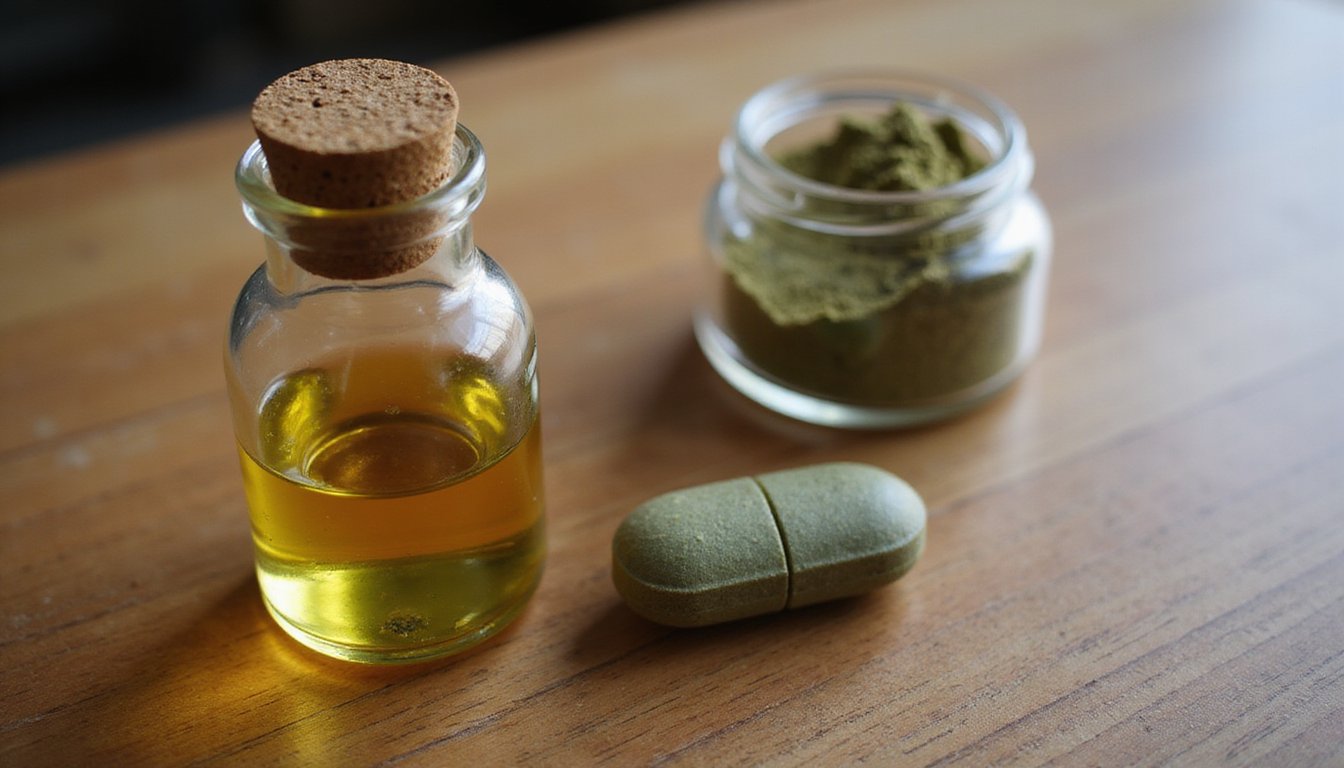
7-OH isolates one alkaloid, 7-hydroxymitragynine, and concentrates it far beyond natural ratios. Where whole leaf holds less than 2% 7-OH, extracted products reach purities up to 98%. The result binds opioid receptors up to 13 times more powerfully than morphine, delivering rapid, intense sedation that whole-leaf kratom doesn’t produce. This dramatically heightened potency means casual experimentation can quickly escalate to serious substance use problems, disrupting lives far more rapidly than traditional kratom use.
Why 7-OH Is Up to 50x Stronger Than Kratom
When you compare 7-OH to whole-leaf kratom, the difference comes down to receptor-level pharmacology: 7-hydroxymitragynine binds mu-opioid receptors with nanomolar affinity up to 13 times greater than morphine, while mitragynine, kratom’s dominant alkaloid, acts as a weaker partial agonist at those same sites. Natural *Mitragyna speciosa* leaf contains less than 2% 7-OH by dry weight, but refined commercial products concentrate it to levels that bypass the plant’s built-in pharmacokinetic buffering. That shift from trace botanical constituent to isolated high-potency compound is what transforms a traditional Southeast Asian preparation into something your brain processes like a synthetic opioid. Because concentrated 7-OH products lack long-term safety data, users face unpredictable risks that whole-leaf kratom’s centuries of traditional use have never presented.
Opioid Receptor Binding Strength
Three distinct opioid receptor subtypes, mu, delta, and kappa, govern how substances like 7-OH interact with the brain, and 7-OH’s selectivity for the mu receptor explains why it produces effects far more intense than raw kratom leaf. 7oh hydroxymitragynine binds mu receptors at a Ki of 7.2 nM, dramatically tighter than its affinity for delta or kappa sites.
| Receptor | Ki Value (nM) |
|---|---|
| Mu | 7.2 |
| Delta | 236 |
| Kappa | 74.1 |
This mu-selective profile means 7-OH concentrates its activity precisely where opioid euphoria, sedation, and dependence originate. You’re not getting a broad, diffuse botanical effect, you’re getting targeted receptor activation that mirrors pharmaceutical opioids. That selectivity is what makes 7-OH’s risk profile fundamentally different from whole-leaf Mitragyna speciosa preparations. Beyond its mu-opioid dominance, 7-OH also interacts with serotonin, dopamine, and GABA receptors, compounding its influence on mood, sleep, and overall neurochemistry.
Concentrated Versus Natural Leaf
Inside the living tissue of Mitragyna speciosa, 7-hydroxymitragynine exists as a minor metabolic byproduct, typically less than 2% of dried leaf mass, and often undetectable in freshly harvested foliage. Most 7-OH you’d encounter forms naturally during digestion, when your body converts mitragynine through hepatic metabolism.
Commercial 7oh kratom extract products bypass this biological bottleneck entirely. Laboratory isolation and semi-synthesis concentrate 7-OH to purities reaching 98%, exponentially beyond anything the plant produces. While whole-leaf kratom delivers balanced effects across dozens of alkaloids, these refined extracts deliver a single, pharmacologically dominant compound.
The distinction matters. Traditional kratom use across Southeast Asian communities involved chewing fresh leaves carrying a full alkaloid spectrum. Concentrated 7-OH products bear no resemblance to that practice, pharmacologically, culturally, or in risk profile. Differences between 7oh and kratom can lead to significant variations in user experiences. While kratom offers a range of effects based on strain and dosage, 7oh products are often more predictable in their potency.
What 7-OH Does to Your Body at High Doses

At high doses, 7-OH binds opioid receptors with enough affinity to depress your respiratory drive, the same mechanism that makes classical opioids lethal in overdose. You experience heavy sedation, slowed breathing, and diminished consciousness, particularly when concentrated extract products deliver far more of the alkaloid than whole Mitragyna speciosa leaf ever could. If you combine 7-OH with alcohol or other sedatives, the compounded central nervous system depression can push your body past the threshold where breathing stops entirely.
Respiratory Depression Risk
When you combine high-dose 7-OH with depressants like benzodiazepines or alcohol, the compounded respiratory depression can become fatal. Emergency departments have documented acute respiratory distress syndrome linked to concentrated alkaloid exposures. Pre-existing cardiac conditions, particularly arrhythmias, further amplify your risk, creating cardiopulmonary cascades that demand immediate clinical intervention.
Sedation and Overdose
Overdose risk escalates rapidly. Tolerance develops quickly, driving you toward higher doses that impair brain reward function and produce aversive neurological states. Poison center data document loss of consciousness and serious illness from concentrated 7-OH exposures, outcomes virtually absent from traditional kratom leaf preparation in Southeast Asian practice.
Addiction, Tolerance, and Withdrawal Risks
Withdrawal presents with opioid-characteristic severity: restless limbs, gastrointestinal distress, cold sweats, insomnia, and pronounced anxiety. Concentrated extracts intensify these symptoms beyond what whole-leaf kratom users typically experience.
You’re at increased risk if you’ve shifted from raw leaf to enriched 7oh products or carry polysubstance history. Dependence signs include compulsive dosing throughout the day and inability to reduce intake despite accumulating consequences.
How Labs Turn Kratom Into Concentrated 7-OH
Mitragyna speciosa leaves undergo a multi-stage laboratory process that transforms trace-level alkaloids into the concentrated 7-hydroxymitragynine (7-OH) found in commercial products. Crushed leaves are extracted with 90-95% ethanol, then purified through ethyl acetate and chloroform washes. Acid-base manipulations convert alkaloids between salt and freebase forms, enabling selective isolation.
Once mitragynine’s isolated via chromatography, catalytic oxidation using Rose Bengal and pure oxygen at 0°C converts it to 7-OH. This method avoids toxic heavy metals and allows unoxidized mitragynine to be recycled. Post-oxidation chromatography separates 7-hydroxymitragynine, which elutes first, from remaining mitragynine. Evaporation and crystallization yield a final product exceeding 70% alkaloid purity. With 7oh explained at the molecular level, you can see why these products differ fundamentally from traditional kratom leaf.
7-OH Products Sold at Gas Stations and Online
Dozens of 7-OH product formats now line the shelves of gas stations, vape shops, smoke shops, and convenience stores across the United States, available without a prescription, without age verification in many states, and without any FDA approval for human consumption. You’ll find fruit-flavored gummies, sublingual tablets, drinkable shots, chewables, and brightly colored packaging that resembles candy or supplements, not a compound binding opioid receptors with 13 to 22 times morphine’s potency.
The 7oh FDA warning letters issued to manufacturers cite unlawful distribution in foods and dietary supplements. Yet products remain widely accessible online, shipping to most states without oversight. Labeled concentrations rarely match actual contents, varying batch to batch. You’re purchasing an unregulated opioid-level compound packaged to look like a botanical wellness product.
Is 7-OH Legal in Your State?
How clearly do you understand the legal status of the compound you’re buying at your local gas station? The answer depends entirely on where you live. Alabama, Arkansas, Indiana, and Rhode Island classify 7oh as a Schedule I substance, possession alone carries criminal penalties. Kentucky distinguishes between natural kratom leaf and concentrated 7oh, banning only the isolated alkaloid. Florida’s emergency regulations target 7oh products specifically, while Arizona and Georgia cap allowable concentrations below 2% through Kratom Consumer Protection Acts. States like Alaska, Hawaii, and Iowa impose zero restrictions. California occupies a gray zone: statewide sales continue despite the CDPH declaring 7oh illegal in food and supplements. The FDA has recommended federal Schedule I classification but hasn’t yet secured it.
How to Spot 7-OH in Kratom Products
Can you actually tell whether the kratom product on the shelf contains trace-level, naturally occurring 7-hydroxymitragynine, or a semi-synthetic concentrate engineered to mimic opioid-grade potency? Start with the label. Products listing “7-OH,” “7-hydroxymitragynine,” or “enhanced kratom” signal artificially increased concentrations. Claims like “stronger than regular kratom” indicate 7-OH addition beyond what Mitragyna speciosa leaves produce naturally.
Natural dried kratom leaf contains 7-OH at trace amounts below 0.1%. Commercial products show concentrations up to 500% higher, levels impossible through traditional Southeast Asian harvesting and drying methods. If packaging avoids terms like “lab-derived” or “semi-synthetic” while advertising high potency, you’re likely looking at an adulterated product. Laboratory testing confirms these discrepancies, and poison center reports increasingly link such products to serious adverse outcomes.
Begin Your Path to a Stronger Tomorrow
Some substances act on the brain like powerful opioids, and stepping away safely takes professional medical support. At Fortify Wellness in Los Angeles County, our experienced team provides trusted Treatment Programs with care, compassion, and a personalized approach. Call +1 (818) 918-9564 today and take the first step toward lasting recovery.
Frequently Asked Questions
Can 7-Oh Show up on a Standard Drug Test for Opioids?
Standard drug tests don’t typically detect 7-OH because panels like the 5-panel and 10-panel screen for traditional opioids, not kratom alkaloids. However, you should know that 7-OH’s metabolites can trigger false positives on opioid immunoassays due to cross-reactivity. If that happens, you’ll want to request GC-MS or LC-MS/MS confirmation testing to distinguish kratom compounds from conventional opioids. Specialized kratom panels, like Labcorp’s test 791750, can identify 7-hydroxymitragynine specifically.
Is It Safe to Mix 7-Oh With Alcohol or Prescription Medications?
No, you shouldn’t mix 7-OH with alcohol or prescription medications. Because 7-hydroxymitragynine binds mu-opioid receptors 13 to 22 times more potently than morphine, combining it with alcohol’s CNS depression creates additive respiratory suppression, poison center data show ICU admissions jump from 8.6% to 28.3% with co-exposures. You’re also straining your liver’s metabolic pathways, risking organ failure. The FDA warns against combining 7-OH with any medications due to unpredictable, potentially fatal interactions.
How Long Does 7-Oh Stay in Your System After Use?
7-OH clears your system faster than mitragynine, with a half-life of just 2-3 hours, though concentrated extract forms can extend that window. You’ll typically test positive via urine for 5-9 days, while blood tests only detect it within 24-48 hours. Your metabolism, dosage, and usage frequency all shift these timelines. Standard drug panels won’t flag kratom alkaloids; you’d need specialized LC-MS/MS testing for detection.
Can You Fatally Overdose on 7-Oh Products Sold as Supplements?
Yes, you can fatally overdose on 7-OH products sold as supplements. Because 7-OH acts as a full agonist at opioid receptors, up to 13 times more potent than morphine, it causes severe respiratory depression even at low doses. Los Angeles County documented three fatal overdoses in healthy adults aged 18, 40 from synthetic 7-OH alone. You’re facing a compound with opioid-level lethality disguised in unregulated packaging that lacks consistent potency standards.
What Treatment Options Exist Specifically for 7-Oh Addiction and Withdrawal?
You’ll find treatment mirrors established opioid use disorder protocols. Physicians prescribe buprenorphine or naltrexone to manage withdrawal, while 24-hour medical detox addresses symptoms like bone pain, insomnia, and severe anxiety, comparable to heroin withdrawal intensity. You’ll also benefit from behavioral therapies, including CBT and mindfulness-based interventions, that target the emotional distress driving self-medication. Outpatient continuing care then sustains recovery through ongoing medication management and counseling.